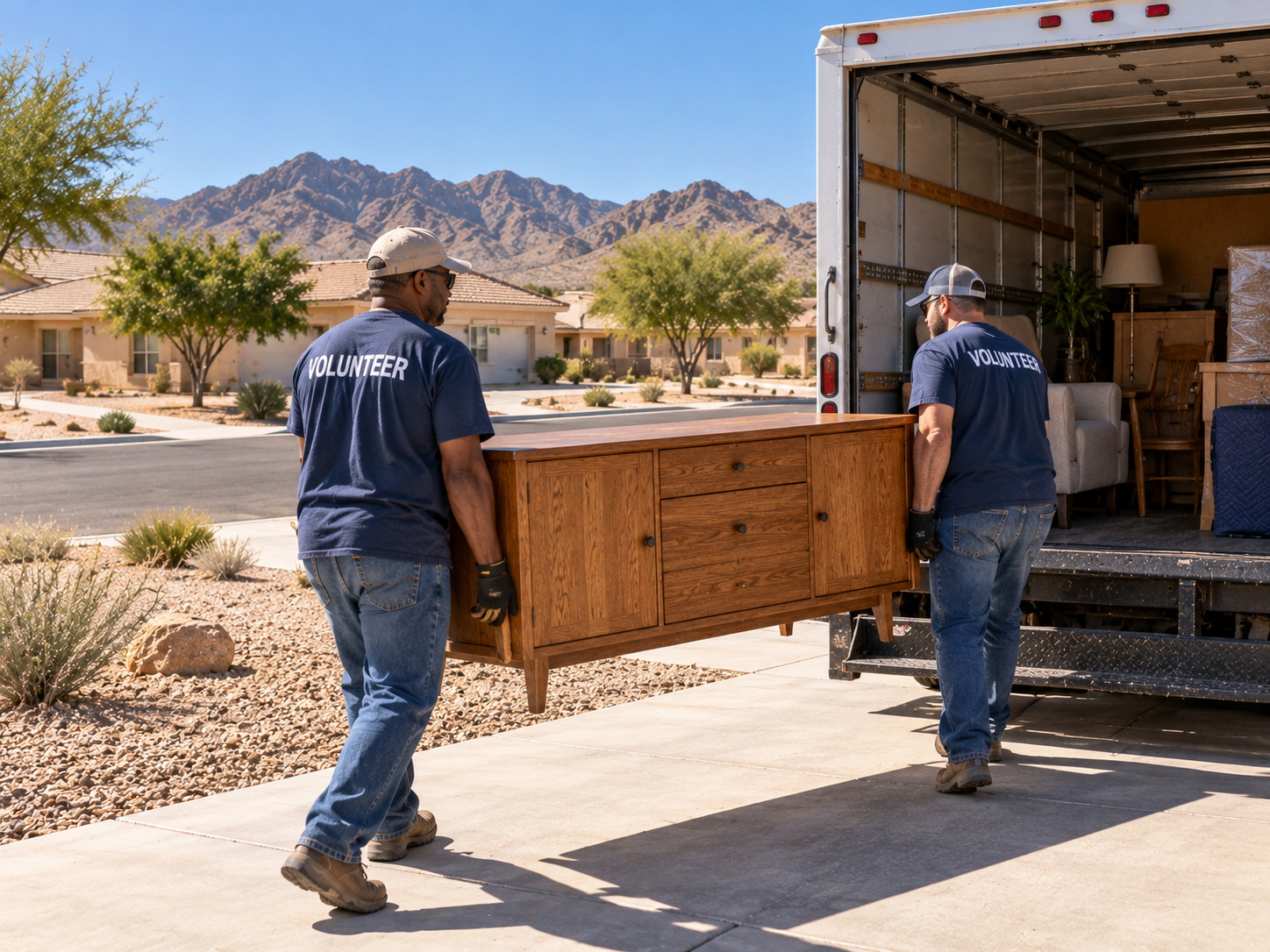

Sweat Equity Hours Habitat for Humanity Families Complete
Sweat equity hours Habitat for Humanity asks of partner families sound harder than they turn out to be. In fact, staff hear from qualified households who read the requirement, picture a construction site they have no business on, and never send the application. So here is the plain version: how many hours, what counts toward them, who is allowed to help, and how families fit the total around a job and childcare.
Sweat Equity Hours Habitat for Humanity Requires
What Counts Toward Sweat Equity Hours Habitat for Humanity Tracks
Three categories, and the third one surprises people. First, hours on your own build. Second, hours on somebody else's build. Third, shifts at the ReStore, which count exactly the same as time on a site.
So the requirement is about participation rather than trade skill. Sorting donated housewares on a store floor and hanging drywall both move the same counter. Also, staff will tell you that is the door most working families end up using, because store hours are easier to schedule than site hours.
Then there is the question everybody asks next. Can family and friends pitch in? Policies vary by affiliate and by the type of hour, so ask the Habitat El Paso team which categories allow it before you plan a schedule around the answer.
So ask at the start how hours get logged and who signs off on them, because a shift nobody recorded is a shift that did not happen on paper. Then confirm that process in the first week rather than reconstructing it in month six.
Sweat Equity Hours Habitat for Humanity Partners Log
Here is the whole requirement in one place. Every line comes from what Habitat El Paso publishes about its own homeownership program rather than from a national summary of how the model works.
| Trait | What it means | Where it comes from | What you notice |
|---|---|---|---|
| Total required | 300 to 400 volunteer hours per partner family | Habitat El Paso homeownership terms | A range, not a single number |
| Your own build | Hours worked on the home you will buy | Habitat El Paso homeownership terms | The most direct category |
| Other builds | Hours on another partner family's home | Habitat El Paso homeownership terms | Open before your own build starts |
| ReStore shifts | Time worked at the store on Dyer | Habitat El Paso homeownership terms | No construction ability needed |
| Family and friends | Depends on the affiliate and the hour type | Habitat El Paso guidance | Ask before planning around it |
| Skill level | Tasks assigned by ability | Habitat El Paso volunteer guidance | Nobody arrives expected to know |
| Why it exists | Partnership is the basis of the whole model | Habitat El Paso mission statement | A hand up, never a gift |
How Many Hours, and Over How Long
The number is 300 to 400 per selected family. So spread across a build season, that is a real commitment and it is also a finite one. It ends.
Then the pace follows the build calendar rather than a clock you set yourself. Naturally that cuts both ways: you cannot rush the total, and you also cannot fall behind quietly. Also, the affiliate's own guidance is to raise a tight month early, because a schedule is far easier to fix in month two than in month eight.
Ultimately the range matters more than the midpoint. A family that plans against 400 and finishes under it has a good problem. However, a family that plans against 300 and drifts has a harder conversation waiting.
Fitting the Hours Around a Job and Childcare
This is the real obstacle, and it is a scheduling problem rather than a willingness problem. So the useful thing to know is that weekend build days, weekday store shifts and shorter evening windows all exist. The schedule bends more than the number does.
Then plan it like any other standing commitment. First, pick a recurring slot. Second, tell your employer early if you need one. Third, treat the hours as fixed rather than flexible, because the flexible version is the one that slips.
Also, block a regular slot rather than fitting hours in wherever they happen to land. In fact, hours at the store count toward the same total, and the Shop the Habitat ReStore page describes what happens on that floor. If a site day is impossible this season, the store usually is not.
Then there is childcare, and it is worth solving before you commit to a slot. So work out the coverage before you commit to a slot rather than after you have promised one. Also, ask the team whether the shifts you are weighing suit somebody arriving with limited time, because a short store shift and a full Saturday on a site are very different asks of a household.
Why Sweat Equity Exists in the First Place
The model rests on partnership. Homes sell at cost on a no-interest, 30-year, fixed-rate mortgage, and the family invests labor alongside the money. So the house is not a gift, and the hours are the part that makes that true.
Also, the hours do something quieter. A family that has framed walls and sorted inventory knows the building and knows the organization by the time they close. Habitat for Humanity International defines the homeowner partnership this way across affiliates, and the income standards behind partner selection trace back to HUD income limit data.
Of course none of that removes the effort. It just explains it. Notably, the requirement is the affiliate's answer to a fair question about why anyone should get a house at cost, and the answer is that nobody does without putting in the work.
What Happens Once the Hours Are Done
The hours end at closing rather than before it. So a family finishing the total moves into the paperwork stage: final mortgage documents, the walkthrough, and a date. Then the second mortgage clock starts, and that note drops away after ten years of on-time payments.
Meanwhile the Family stories and results page collects what the stretch looks like from the family's side. In short, the hours are the middle of the process rather than the end of it.
Also, the dedication day itself is part of the process. A family walks through a finished house they helped build, alongside the people who worked beside them. Naturally that is not a program requirement, but it is where the hours land.
How the Hours and the Mortgage Work Together
First, selection. A Home Selection Committee weighs urgency of need, ability to pay, and willingness to partner. Second, the hours begin against the build calendar. Third, closing, on a no-interest 30-year fixed note.
So the hours are not a fee and they are not a test. Basically, they are the willingness-to-partner criterion expressed as time. The affiliate's Homeownership Program page states all three criteria in full.
Also, the two numbers that decide eligibility sit ahead of any of this. Income at or below the El Paso County area median, and a debt-to-income ratio under 40 percent. Ultimately the hours only matter once those two clear.
Finally, the second note deserves one more line, because it is the easiest part of the arrangement to overlook. It drops away after ten years of on-time payments. So the discipline that carried a household through 400 hours is the same discipline that carries the mortgage afterward.
Volunteer on a build day →Where to Start If You Are Thinking About Applying
The hours are the last thing to worry about rather than the first. So here is the order that actually saves you time.
- Check the two numbers first. Income at or below the area median and a debt-to-income ratio under 40 percent decide whether the rest of this matters at all.
- Then read the hours as a schedule, not a skill. Ask yourself which weekly slot you could protect for a season, because that is the real question.
- Ask about family and friend hours before you plan. Policies vary by affiliate and by hour type, so get the local answer rather than a general one.
- Gather documents before you apply. Income paperwork for every earner in the household shortens everything that comes after it.
Ultimately the honest first step is arithmetic rather than a hammer.
How to apply for a home →Frequently Asked Questions
Q1 What are the sweat equity hours Habitat for Humanity requires?
Q2 How many sweat equity hours does Habitat El Paso require?
Q3 Do I need construction experience to complete sweat equity?
Q4 Can my family help with my sweat equity hours?
Q5 What happens if I fall behind on my hours?
Start With the Arithmetic
Sweat equity hours Habitat for Humanity requires come to 300 or 400, and they bend around a working schedule more than the number suggests. So check the income and debt figures first, then ask yourself which weekly slot you could hold for a season. Then call 915-755-6633 or stop by 8500 Dyer, Suite 82 and ask what the current build calendar looks like.