
Where Do Habitat for Humanity Donations Go in El Paso?
Where do Habitat for Humanity donations go once the receipt is in your hand? That is the question a careful donor asks before giving rather than after. So this page answers it the only way that actually settles anything, which is by following one physical object from a curb in El Paso all the way to a family's closing day. No mission statement, no pie chart. Just the route a donated chair takes.
Where Do Habitat for Humanity Donations Go? The Short Answer
Where Do Habitat for Humanity Donations Go First
Money and goods enter through different doors, so they are worth separating. A cash gift goes to the affiliate directly. A donated dresser goes to the ReStore, gets priced, and becomes cash when somebody buys it.
So the second route has one extra step and the same destination. In fact, that step is the part most donors never picture, which is why a chair on a curb feels less like a donation than a check does. It is not.
Then both streams land in the same three places. First, new construction. Second, repairs on homes people already own. Third, the operations that keep the first two possible, including the 2,500 volunteer hours a year the affiliate logs.
Where Do Habitat for Humanity Donations Go, Line by Line
Here is the whole picture in one place. Every figure below comes from what Habitat El Paso publishes about its own work rather than from national averages for the organization.
| Trait | What it means | Where it comes from | What you notice |
|---|---|---|---|
| New construction | Homes sold at cost to partner families | Habitat El Paso homeownership terms | 67 homes finished to date |
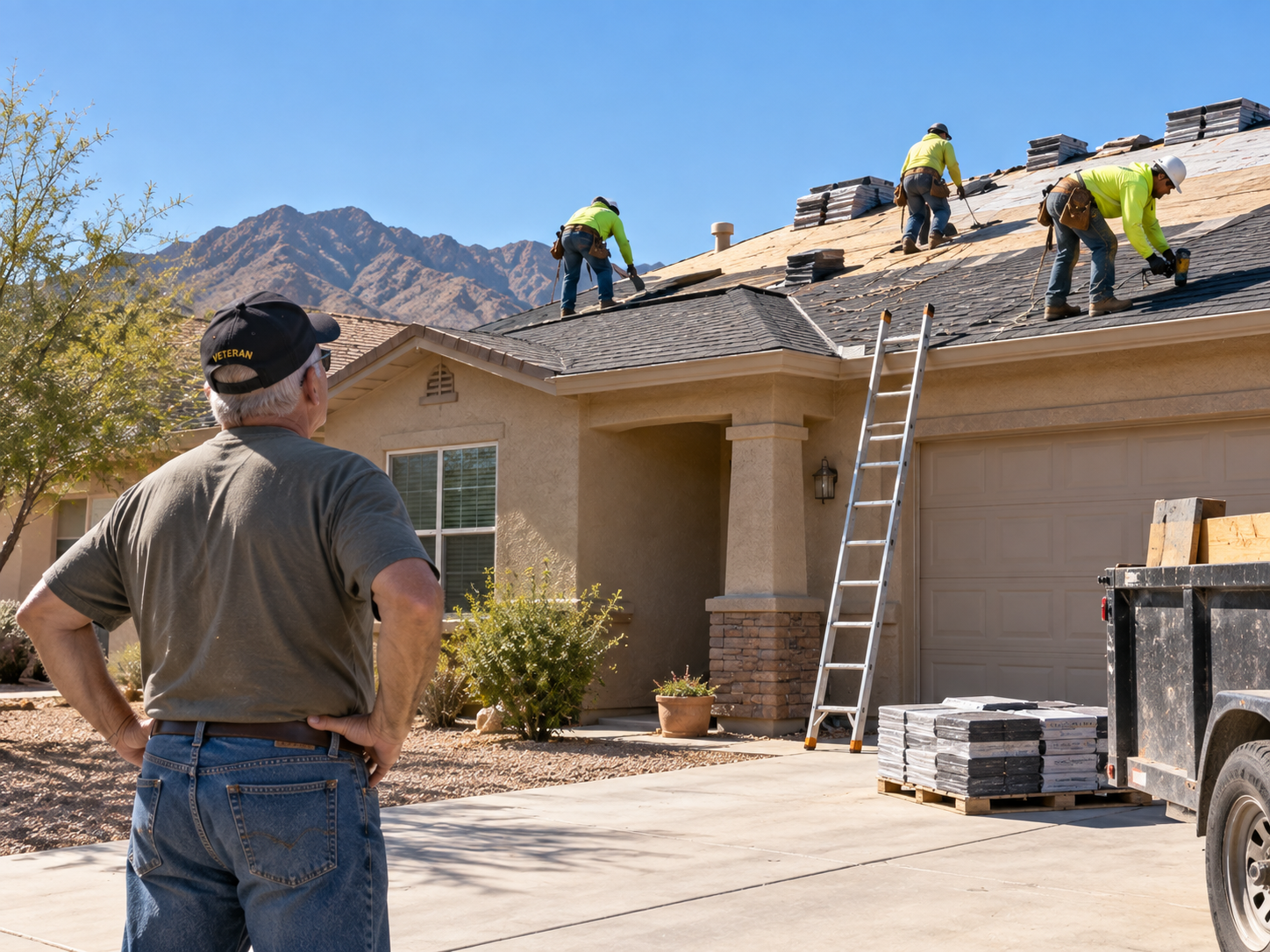
| Home repairs | Critical repair and accessibility work | Habitat El Paso repair programs | 32 repairs and renovations a year |
| The ReStore | Donated goods resold at a fraction of retail | Habitat El Paso ReStore page | It funds the other two lines |
| Families served | Households reached since the affiliate opened | Habitat El Paso about page | 1,200 families since 1981 |
| Volunteer effort | Donated labor rather than paid labor | Habitat El Paso about page | 2,500 volunteer hours a year |
| Geography | El Paso County, through the local affiliate | Habitat El Paso blog | Gifts here fund work here |
| The model | Homes sold, not given, on a no-interest note | Habitat El Paso homeownership terms | A hand up rather than a gift |
Follow One Donated Chair From the Curb to Closing Day
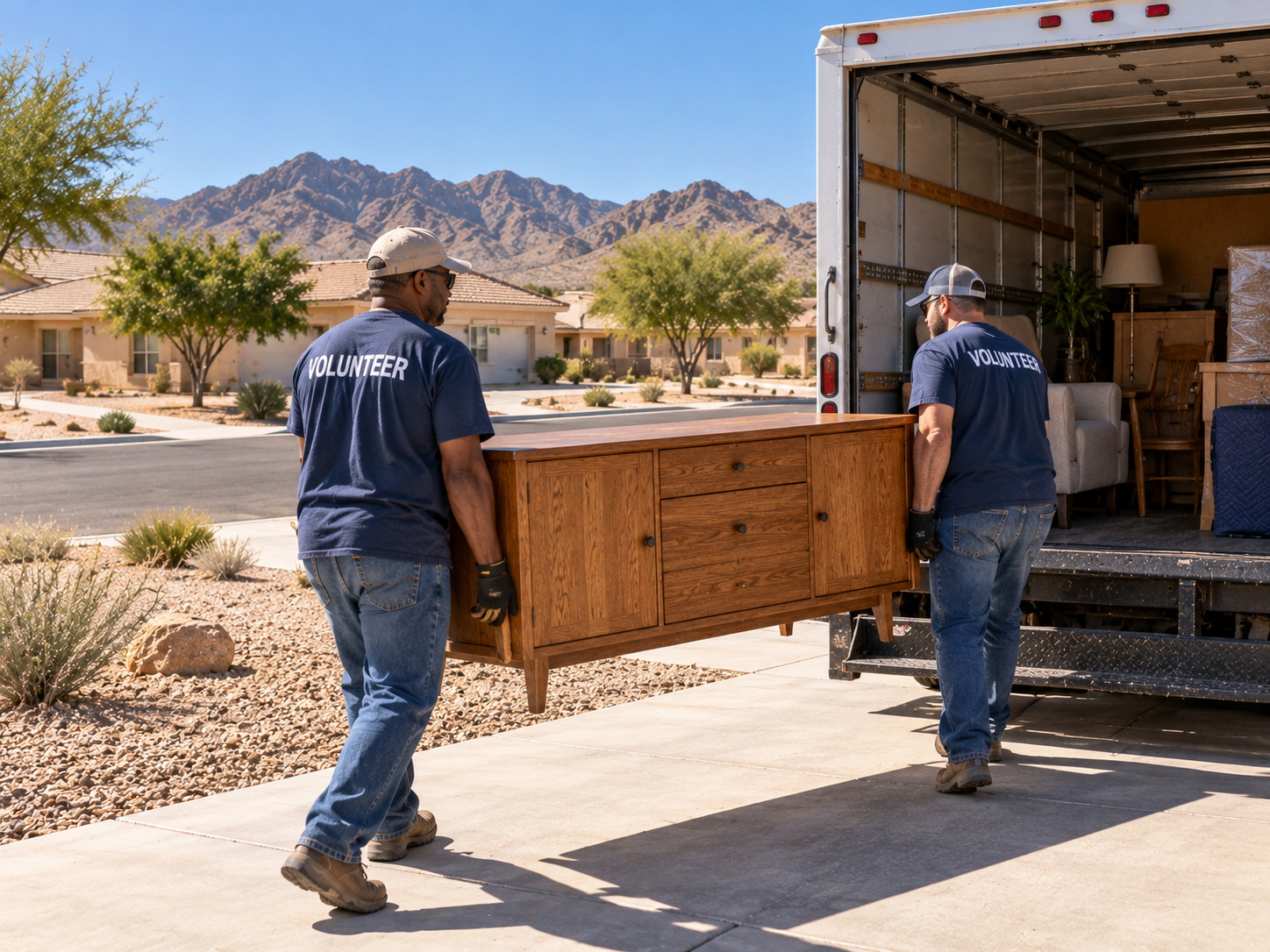
Start on a Saturday morning. A household in El Paso puts a solid oak armchair at the curb on a scheduled pickup day, and a crew loads it. So far nothing has happened that looks like housing.
So why trace an object rather than quote a percentage? Because a percentage tells you how money was divided, not whether anything happened. In fact, a donor can read a pie chart and still not know what changed on a street in this county. Then a chair answers it, because a chair has a location.
Then the chair reaches receiving, where somebody checks it against the condition standard and prices it. Next it goes to the floor. A week later a shopper furnishing a first apartment buys it for a fraction of what a new one costs, and that is the moment the chair turns into money.
Also, that money does not sit. It joins the pool the affiliate builds and repairs from. Ultimately the chair shows up somewhere it is unrecognizable, as part of a roof, a bathroom conversion, or a mortgage a family can actually carry. The Shop the Habitat ReStore page is the middle of that story.
How ReStore Sales Fund Builds and Repairs
The ReStore is the engine, and it is easy to underrate. So consider what it actually does: it accepts donations of new and slightly used housewares and sells them to the public at a fraction of the retail value.
That produces two things at once. First, revenue the affiliate raises itself rather than applies for. Second, a reason for people to walk in who would never have donated cash. In fact, the store converts a shopper into a supporter without ever asking them to be one.
Also, it runs every week rather than once a campaign. So a donation made in March is still working in November.
Also, the store does two jobs at once. It keeps a usable object in circulation, and it turns that object into a roof. So a donation that would otherwise be somebody's disposal problem becomes revenue instead. Ultimately that is a better outcome than either half of it alone.
What 67 Homes and 1,200 Families Actually Represent
Numbers this size stop meaning much unless you unpack them. So take 67 homes. Each one is a family that went through selection, completed 300 to 400 sweat equity hours, and closed on a no-interest, 30-year, fixed-rate mortgage.
Then take 1,200 families served since 1981. That figure is wider than the build number because it includes repairs, renovations and the households reached through programs other than new construction. Notably, the two are not the same measure and the affiliate publishes both.
Then there is what the figures deliberately do not claim. The affiliate does not round them up, and it does not publish a dollar figure for social return. So you are looking at counts of real things: houses that exist, repairs that were finished, hours that were logged. Of course counts are less exciting than projections. They are also much harder to overstate.
For instance, a Family selected for home build is one line in the first number, while a Vietnam veteran home rehab is one line in the second. Of course both started as somebody's donation.
Local Affiliate Versus National: Where El Paso Dollars Stay
This is the question skeptics ask, and it deserves a direct answer. Habitat for Humanity of El Paso is the local affiliate serving El Paso County, founded in 1981 and one of the oldest in Texas. So gifts to the affiliate fund work here.
Also, the affiliate structure itself is worth understanding rather than guessing at. Habitat for Humanity International publishes how affiliates relate to the national organization and what standards they hold to.
Then apply the practical version. If you want your money working in this county, give to the county affiliate rather than to a national appeal and hope. That logic is not specific to this organization.
Also, the local answer is checkable in a way a national one is not. So you can drive to 8500 Dyer, Suite 82 and look at the store. You can read the names of the families. In fact, that is the whole advantage of giving to a county affiliate, because the work is close enough to go and see.
About Habitat El Paso →How to Check Any Nonprofit Before You Give
Do this with every organization, including this one. So here is the short version of due diligence that does not take an evening.
- Check an independent evaluator. Charity Navigator rates nonprofits on financial accountability and transparency, which is a different question from whether you like the mission.
- Read the organization's own numbers. Then see whether they publish figures at all, and whether those figures are specific rather than round.
- Confirm the service area. A national brand does not guarantee local work, so check that the entity you are giving to serves the place you care about.
- Look for the mechanism, not the story. A good story tells you what happened once. A published mechanism tells you what happens every time.
Naturally the deduction side matters too. Donors who itemize deduct the fair market value of donated goods, and the IRS noncash contribution rules cover what documentation to keep.
Cash, Goods, or Hours: Which Helps Most Right Now
All three work, and they are not interchangeable. So the honest answer depends on which one you have surplus of this month.
Cash is the most flexible, because it goes where the build calendar needs it without a conversion step. Goods are the most sustainable, since a stocked ReStore floor produces revenue every week. Meanwhile hours are the hardest to replace, and the affiliate logs 2,500 of them a year for a reason.
Then there is the one nobody counts. Telling somebody else what you found out here costs nothing at all. In fact, staff will tell you that is how a lot of supporters found the affiliate to begin with.
So here is a rough rule for picking. If you are short on time, give money. If you are clearing out a house, give goods. If you have a Saturday and no spare cash, give hours. Then do the one that fits this month rather than the one you feel you ought to do, because the one you finish is worth more than the one you plan.
Family stories and results →Frequently Asked Questions
Q1 Where do Habitat for Humanity donations go?
Q2 Does money donated in El Paso stay in El Paso?
Q3 How does the ReStore fund the mission?
Q4 How can I verify a nonprofit before donating?
Q5 Does Habitat give the homes away once they are built?
Give Before the Year Closes
Where do Habitat for Humanity donations go in this county? Into 67 homes, 32 repairs a year, and a store floor that funds both. So pick the one you have surplus of, whether that is money, a dresser in the garage, or a Saturday. Then call 915-755-6633 or stop by 8500 Dyer, Suite 82 and put it to work before December.