Habitat for Humanity El Paso Donation Impact: 67 Homes Built
The Habitat for Humanity El Paso donation impact is not a slogan, it is arithmetic you can check. So here it is, up front: 67 homes built, 1,200 families served, 32 repairs and renovations completed each year, and 2,500 volunteer hours contributed annually. Most donors never get that math. They get a thank-you note and a warm feeling. In fact, that vagueness is the single biggest reason a person gives once and then never gives again. Here is where your money actually lands.
Habitat for Humanity El Paso Donation Impact, in One Answer
The Question Donors Do Not Ask Out Loud
Here is the question most people are too polite to ask us: where does my money actually go? It is a fair question. Donors tell us they want to know where charity donations go before they hand over another one. So they hesitate. Meanwhile the next appeal arrives, the hesitation hardens, and a generous person quietly becomes a lapsed one.
We think that is a reporting failure, not a generosity failure. Charity Navigator built an entire rating system around nonprofit transparency, and Charity Navigator's transparency standards reward groups that publish plain, checkable results. Also worth saying plainly: our figures are local. They describe El Paso County, not a national average rolled downhill onto a Texas map.
So we publish them as an impact report anyone can read. You can also read real outcomes from our builds in the families' own words, then hold those stories against the numbers below. Of course, figures alone move nobody. However, figures plus names usually do.
Our Numbers at a Glance: 67 Homes, 1,200 Families
Below sits every impact figure we publish, what each one means, where it comes from, and what it looks like on the ground. Notably, none of these are projections. Each traces to our own records for El Paso County.
| Trait | What it means | Where it comes from | What you notice |
|---|---|---|---|
| 67 homes built | Houses finished and sold at cost to local families. | Our records | So a block gains owners, not just renters. |
| 1,200 families served | Households reached through builds, repairs and ReStore programs. | Our records | Neighbors spread across El Paso County. |
| 32 repairs yearly | Home repairs, renovations and rehabilitations finished each year. | Our records | Sounder roofs, safer doors, usable bathrooms. |
| 2,500 volunteer hours | Donated labor logged on build sites and inside the ReStore. | Our records | Work no payroll line ever covers. |
| Mortgage terms | Homes sell at cost on a no-interest, 30-year fixed mortgage. | Program terms | A payment a working family can carry. |
| Sweat equity | Each partner family works 300 to 400 hours on Habitat builds. | Program terms | Owners who helped raise their own walls. |
How a Habitat Home Actually Gets Funded
One big check does not pay for a Habitat house. Instead, we stack it from four sources: donated money, donated goods, donated labor, and the family's own mortgage payment. First, gifts and grants cover land, permits and the materials nobody thinks to donate. Then volunteers supply the labor a build would otherwise have to pay for.
Finally the family buys the house at cost on a no-interest, 30-year fixed mortgage, and those payments recycle into the next build. Habitat for Humanity International sets the affiliate standards that keep this model steady across the country. So your gift never vanishes into a single address. It rolls forward, house to house.
The Three Engines: ReStore Revenue, Volunteer Labor, Donor Dollars
Three engines drive every build here. First, the Habitat ReStore resells donated housewares and building materials to the public at a fraction of retail value. That revenue carries no restrictions, which matters more than it sounds. Also, it means we can aim the money at whatever need is sharpest that month.
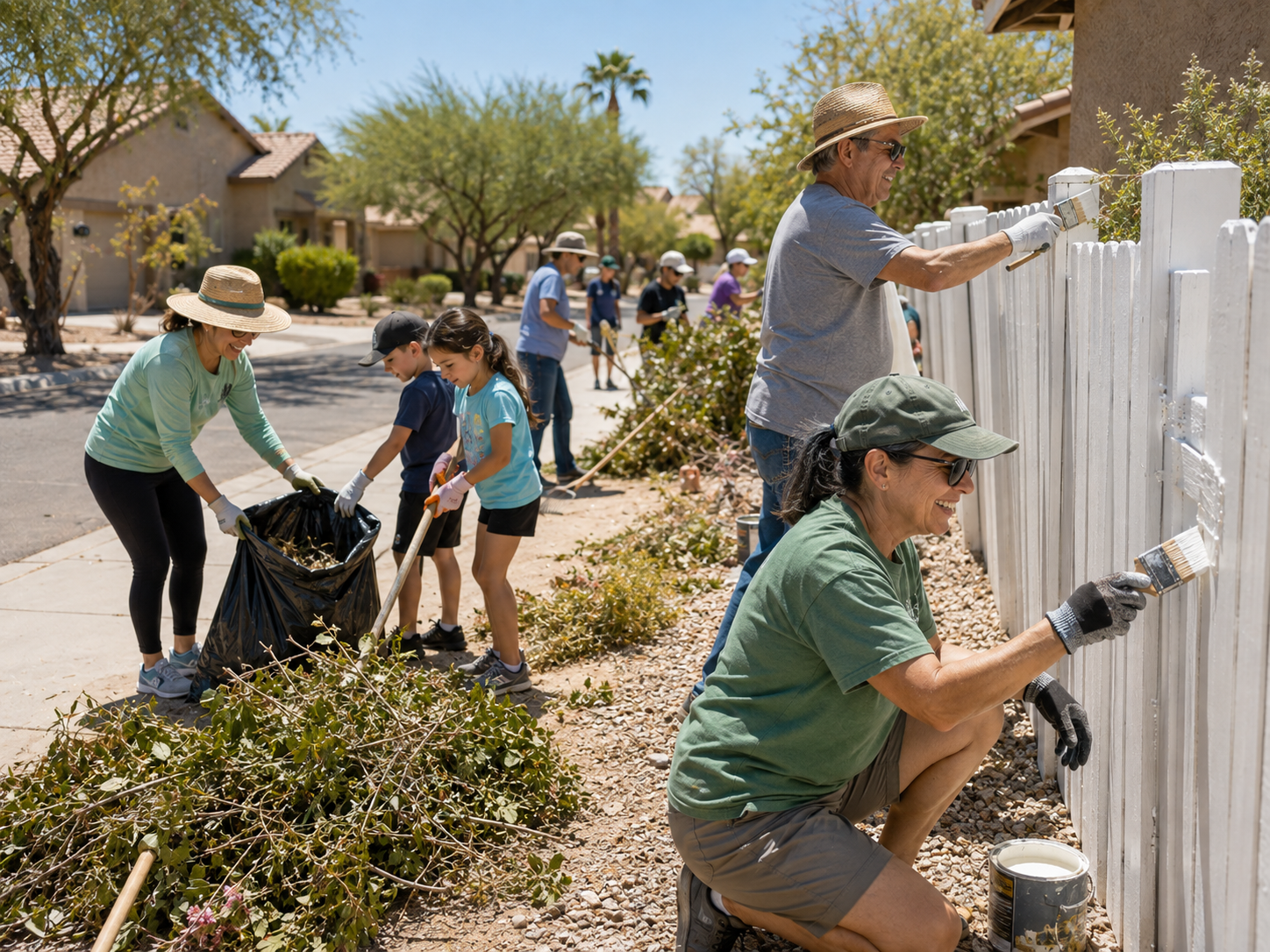
Second, volunteer labor adds 2,500 hours a year, logged by neighbors, church groups and company crews. You don't have to lift a hammer to help. Third, donor dollars cover what nobody donates: concrete, permits, inspections. So a gift of goods, a gift of time and a gift of cash all end up in the same wall.
What Swing Big, Build Bigger Raised This Month
Swing Big, Build Bigger came back to Topgolf this August, and the bays filled with sponsors, families and volunteers who came to help more than to golf. That was the point. Every sponsorship, mulligan and raffle ticket rolls straight into local builds and repairs, so nobody had to swing well to do good.
We are still counting pledges, so we will publish the final tally once every commitment clears. Meanwhile the Topgolf fundraiser details page carries the sponsor list and the recap. Above all, thank you. The room was full because El Paso showed up for it.
Why Recurring Gifts Lift the Habitat for Humanity El Paso Donation Impact
One-time gifts are wonderful, and we need them. However, a build schedule runs on predictability. When we know what arrives on the first of the month, we can commit to a slab in March instead of hoping for one in July. So monthly donors do something a single large gift cannot. They let us plan.
Monthly giving also spreads the load on you. Donors tell us a small recurring amount sits easier than one lump sum, and it lands twelve times instead of once. Ultimately that steadiness is what turns 32 repairs in a good year into 32 repairs every year, no matter how the fall goes.
How to Give, Step by Step
Giving here is deliberately low-friction. First, decide what you have to give: money, goods or time. Second, pick the channel that matches, whether that means the donation portal for cash, the ReStore for furniture and building materials, or a build day for hours. Third, tell us if you want the gift to repeat.
If you are donating goods and cannot haul them, we come to you through Curbside Kindness. Leave the furniture or building materials at the curb and we handle the rest. Questions go to 915-755-6633, or visit us at 8500 Dyer, Ste. 82, El Paso, and we will walk you through it.
Shop the Habitat ReStore →Three Ways to Give, at Three Levels
Not every donor has the same room to move, and we would rather meet you where you are. So here are three levels of giving. Each one lands in the same place, which is a family's front door.
- Give what you already own. Furniture, appliances and leftover building materials sell at the ReStore, and that revenue funds builds and repairs. It costs you nothing but a curbside handoff.
- Give a few hours. Build sites and the ReStore both need hands, and no construction skill is required. Likewise, work teams and church groups can book a day together.
- Give monthly. A recurring gift, set once, buys materials all year and lets us schedule the next build with real confidence.
- Give at a milestone. Birthdays, memorials and year-end all work well, and a gift made now arrives exactly as the fall build calendar gets set.
Notably, there is no level here where you sit and watch. Every one of them touches a house. If none of these quite fit, there are other ways to pitch in around town, and a hand up looks like all of them.
ways to volunteer with us →Frequently Asked Questions
Q1 What is the Habitat for Humanity El Paso donation impact so far?
Q2 How many homes has Habitat El Paso built?
Q3 How many families has Habitat El Paso served overall?
Q4 How does the ReStore support the Habitat mission?
Q5 Can I set up a monthly donation?
See the Habitat for Humanity El Paso Donation Impact for Yourself
The Habitat for Humanity El Paso donation impact is simply what neighbors built together: 67 homes, 1,200 families and 32 repairs a year. So check the numbers, then go look at the houses. If the two line up for you, give once or give monthly, and we will show you the next one going up.

Do I Qualify for a Habitat Home in El Paso? The Honest Answer About Income, Credit, and Sweat Equity